
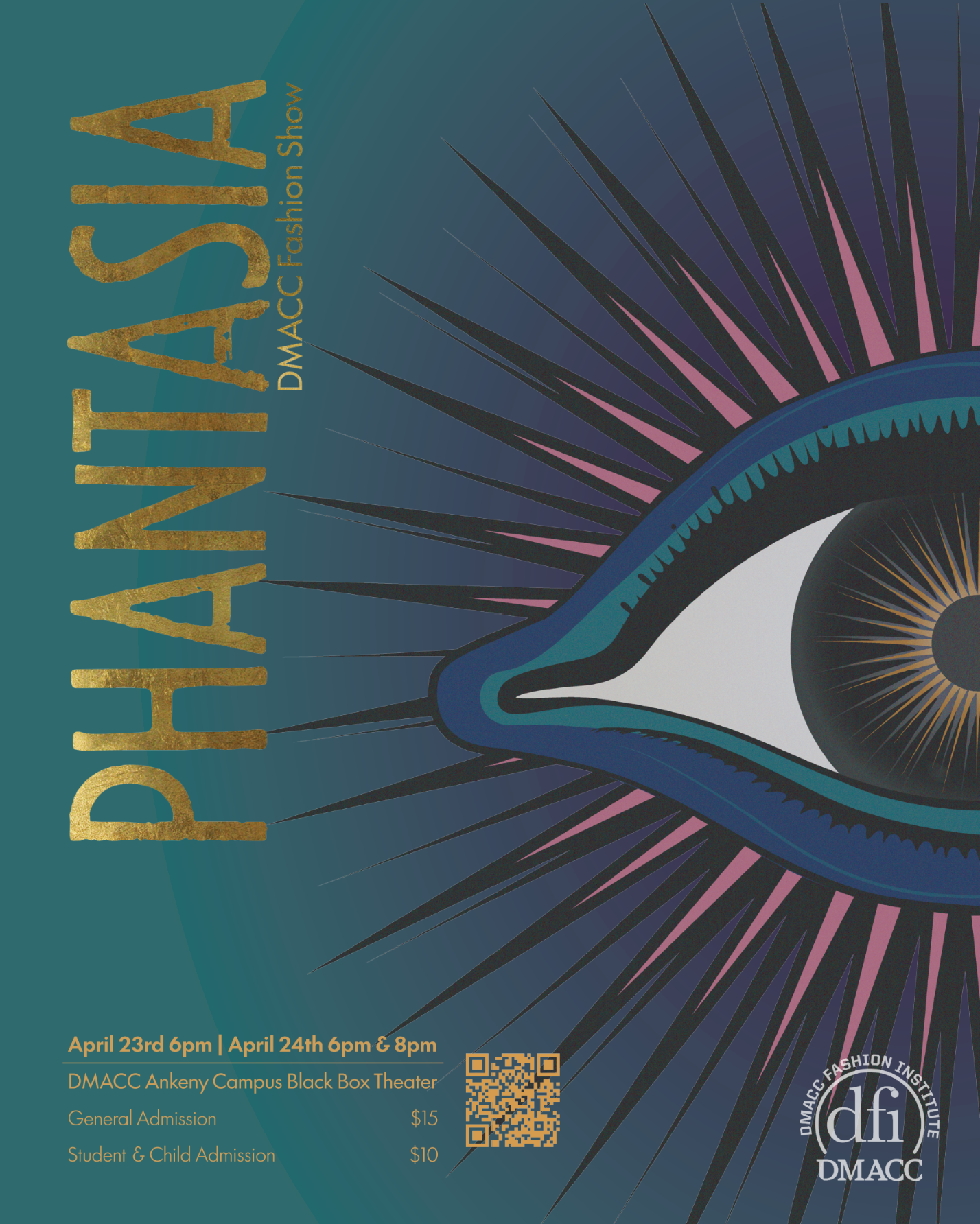
 The DMACC Fashion Institute will hold its annual fashion show on April 23 at 6 p.m. and April 24 at 6 p.m. and 8 p.m in the Black Box Theatre in Building 5.
Tickets are still on sale, but Friday’s show is halfway sold out. They have just sent out their VIP tickets for DMACC faculty, staff, administration, and sponsors. According Fashion Design Professor and Program Chair Ann Gadbury, “We send out unique invitations that connect to the show theme to supporting DMACC employees of the program.” The theme this year is “Phantasia.”
According to Show Director Claire Hetherington, this theme is “a transcendental, illusionary show that is elevated through fashion, design, and lights.”
Planning the DMACC fashion show is done by students taking the class APP 295, Fashion Events and PR, which is during the spring semester. All of the designers and the crew are DMACC students, and professors help lead them. The students start by creating a presentation for a potential theme, and they all vote on it. They pick a color scheme and an idea for the stage. The student whose theme gets chosen becomes the show director.
The show director’s job includes making sure the stage matches the theme and that everything, except the clothes, goes with it. It also includes making sure the team keeps up with their deadlines and that the show runs smoothly. For this year’s theme, they are going to do an artistic prop at the entrance, and the show will fit the illusion theme.
At the end of the show, they have a “flood” to show the designers and their designs. The flood is when the designers walk behind their models on the runway.
Brooklyn Bills is the marketing director, and her job is setting up ticket purchasing and sponsorships. The marketing team includes the social media marketer, two fundraising and sponsorship coordinators, and a graphic designer. The marketing team promotes the fashion program for sponsorships and tries to sell more tickets.
Tickets are $15 for general admission and $10 for students. The fashion show needs to raise at least $7,000, and they are at $2,400. Their goal is around $7,000, but they usually spend around $10,000 for the whole production. They reach out to local businesses for sponsorships.
Finding sponsors is also a learning experience for students. According to Gadbury, “Students learn how to identify ideal sponsors who have target markets similar to the patrons of the show.”
Some sponsors donate products and services for a silent auction used to raise funds or give monetary donations. The sponsors are given 2-4 tickets to the show depending on their tier level.
About a month and a half before the show, they have model castings for people of all ages and body types, and they do not have to be DMACC students. At the model casting, they take model measurements, headshots, and walk auditions. Designers fill out an application that states what they’re looking for in a model and what the designer needs. Model coordinators help connect models with the designers. Designers reach out to the models, and they set out times to talk about the upcoming designs. They are required to meet up with their models to figure out fittings, hair, makeup, and accessories.
They have multiple categories that their designs can fall into. The styled category is an outfit that is purchased, and the designer styles it together. The avant-garde category is where they make wearable art to show. They have two sewing categories: cut and sew and reworked. Cut and sew is when the designers make their own outfits from different fabrics. Reworked is using recycled fabrics and/or clothes to sew different outfits together. The last category is costume. Costume designs are the designers making outfits that fit the theatrical theme.
Gadbury said, “This fashion show is a showcase of the skills they’ve learned and the talent they’ve nurtured.”




Comments